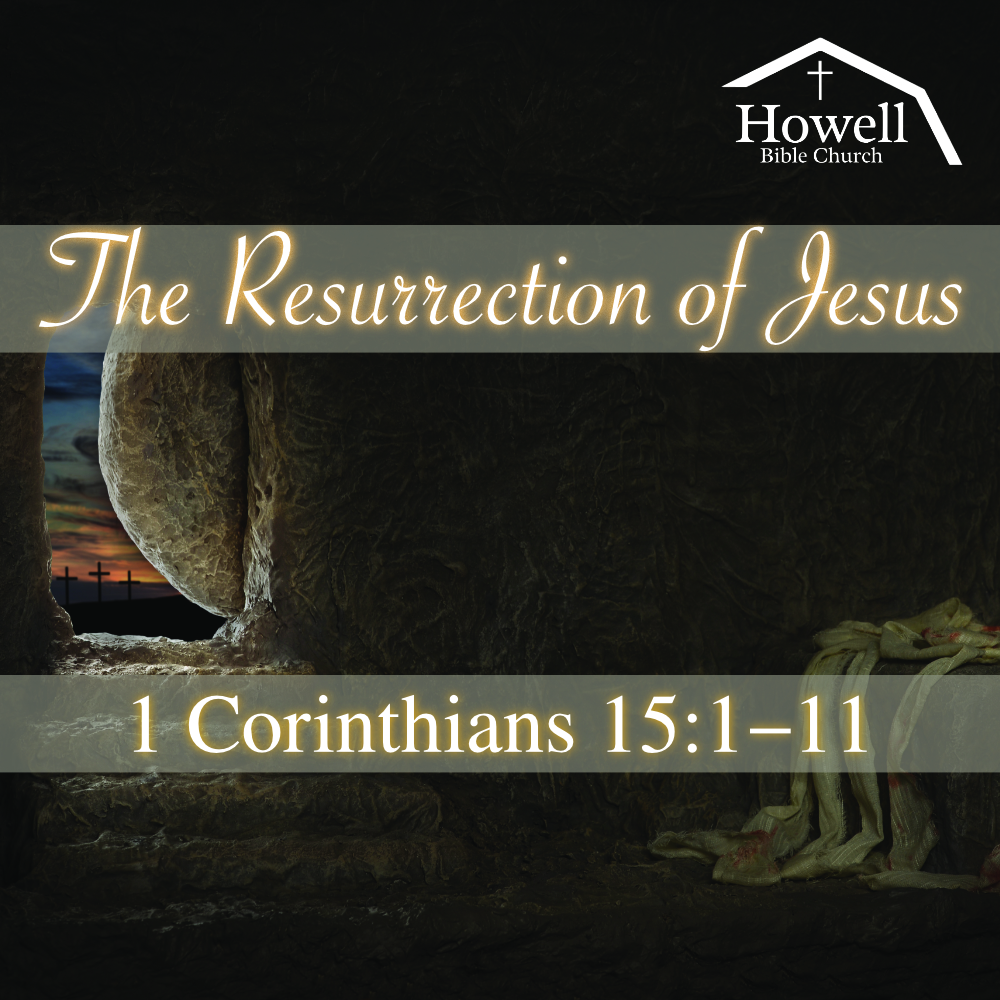
Millions of Christians around the world gathered yesterday to celebrate Easter. In this celebration, we are reminded of an event that happened nearly 2,000 years ago. An event that forever changed the world. The resurrection of Jesus Christ is not just a cornerstone of Christian faith but a transformative truth that invites us to reevaluate our understanding of reality itself. Today, we delve into the significance of the resurrection as highlighted in 1 Corinthians 15:1-11 and explore the compelling evidence that supports this pivotal event.
The Resurrection: A Matter of First Importance
In 1 Corinthians 15, the Apostle Paul emphasizes the resurrection’s central role in the Gospel message. He writes, “For I delivered to you as of first importance what I also received: that Christ died for our sins according to the Scriptures, and that He was buried, and that He was raised on the third day according to the Scriptures” (1 Corinthians 15:3-4). Paul makes it clear that the resurrection is not just an ancillary belief but the foundation of the Christian faith. Without it, there is no good news, no gospel.
Evidence for the Resurrection: A Historical Perspective
The resurrection of Jesus is supported by substantial historical evidence, making it a credible event rather than a mere legend. Here are some key pieces of evidence:
- The Crucifixion and Death of Jesus: The crucifixion of Jesus is a historical fact, corroborated not only by the New Testament but also by extra-biblical sources like the Roman historian Tacitus. He wrote, “Christus, from whom the name had its origin, suffered the extreme penalty during the reign of Tiberius at the hands of one of our procurators, Pontius Pilate.”
- The Empty Tomb: The discovery of Jesus’ empty tomb by women is a significant detail, as women’s testimonies were not considered credible in Jewish society at the time these events were recorded. The fact that the Gospel writers included this detail suggests they were faithfully recording what happened, despite its potential embarrassment.
- Post-Resurrection Appearances: Jesus appeared to His disciples and over 500 people after His resurrection. These appearances were not hallucinations or visions; they were tangible encounters where individuals spoke with, ate with, and touched the risen Christ.
- Transformation of the Disciples: The disciples, once fearful and hiding, became bold proclaimers of the Gospel. They were willing to die for their testimony of the resurrection, a testament to their conviction that they had truly encountered the risen Lord.
- Conversion of Skeptics: Jesus’ brother James and Saul of Tarsus (later Paul) were initially skeptics. James became a believer after witnessing the resurrected Jesus, and Paul, a former persecutor of Christians, converted after encountering Christ on the road to Damascus.
Prophecies Fulfilled: The Old Testament’s Testimony
The resurrection should not have been a surprise to those familiar with the Old Testament prophecies. Prophets like David, Isaiah, and Zechariah foretold the Messiah’s suffering, death, and resurrection centuries before they occurred. For instance, David wrote, “For You will not abandon my soul to Sheol, nor will You allow Your Holy One to undergo decay” (Psalm 16:10), a prophecy fulfilled in Jesus’ resurrection.
For more on what the Old Testament prophesied about Christ, check out this article on our media site, The Exalted Christ: The Testimony of Moses about the Christ.
The Impact of the Resurrection on Believers
The resurrection is not merely a historical event; it has profound implications for believers today:
- Assurance of Salvation: Christ’s resurrection confirms that God accepted His sacrifice for our sins. As Paul states, “He was delivered over because of our transgressions and was raised because of our justification” (Romans 4:25).
- Spiritual Transformation: Believers are “born again to a living hope” through the resurrection (1 Peter 1:3). This transformation empowers us to live holy lives, free from the bondage of sin.
- Hope of Eternal Life: Just as Christ was raised to immortality, believers will also be raised to eternal life. “For as in Adam all die, so also in Christ all will be made alive” (1 Corinthians 15:22).
Call-to-Action: Embrace the Resurrection’s Truth
The resurrection of Jesus is an invitation to embrace a life of faith, transformation, and hope. If you have not yet accepted this truth, consider the evidence and the profound impact it can have on your life. Repent, put your faith in Jesus Christ, and experience the new life He offers. For those already in Christ, let this truth fill your heart with gratitude and joy, knowing that your faith is grounded in the solid foundation of Christ’s death and resurrection.
Conclusion
The resurrection of Jesus Christ is a historical reality with transformative power for all who believe. It is the cornerstone of our faith, offering assurance, transformation, and hope. As we celebrate this Easter, let us reflect on the profound implications of the resurrection and commit to living in its truth, allowing it to shape our lives and our futures.
The blog post is based off the sermon preached on Easter Sunday, 4.20.2025, by Evangelist Eric Love. To listen to the entire sermon, follow this link.
 Howell Bible Church