Finding Glory Through Humiliation
A reflection on John 19:1-15
Have you ever noticed how jarring it can be to sing songs of praise about Christ’s glory, then immediately turn to passages depicting His suffering? This past Sunday, we experienced exactly that contrast as we moved from exalted worship into John 19—one of Scripture’s most difficult passages.
The Uncomfortable Truth
I’ll be honest: there’s nothing I find harder to preach about than Christ’s suffering. Not because I’m ashamed of it, but because the depths of humiliation He endured for our salvation still grieves me. It forces me to confront just how terrible our sin is that it required such a sacrifice.
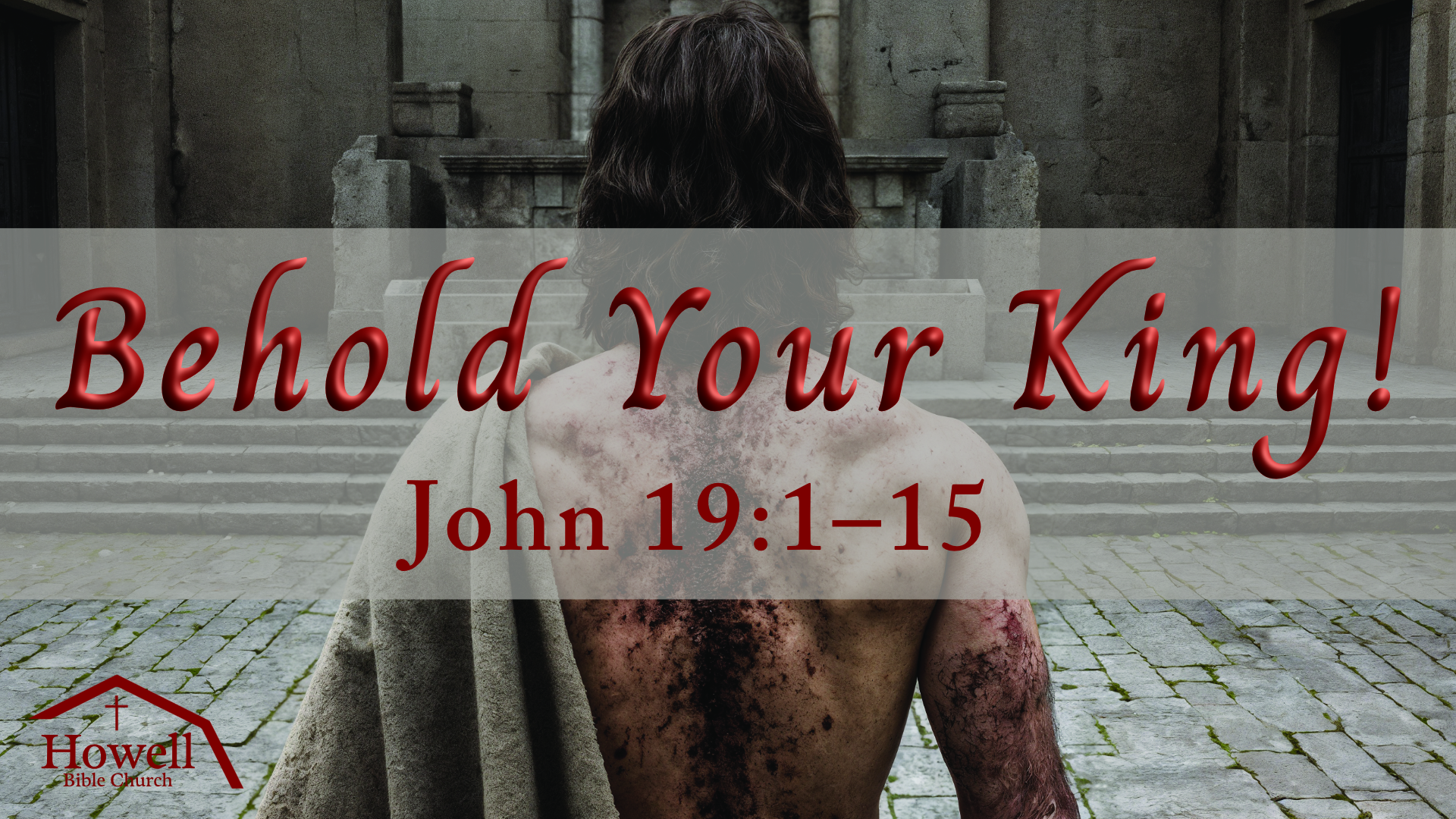
When we read “Pilate then took Jesus and scourged Him” (John 19:1), it’s easy to breeze past in a second. But this single sentence contains unspeakable horror. The Romans were experts at inflicting pain, and the scourging Jesus received was their worst level—a beating that often killed men before they ever reached crucifixion. By the time they finished, Jesus would have been barely recognizable, a bloody pulp of a man.
Adding Insult to Injury
As if the physical torture wasn’t enough, the soldiers then engaged in cruel mockery:
- They twisted together a crown of thorns
- Dressed Him in a purple robe
- Repeatedly slapped His face
- Mockingly hailed Him as “King of the Jews”
What’s remarkable is that this exact treatment was prophesied 700 years earlier in Isaiah 50:6: “I gave my back to those who strike me and my cheeks to those who pluck out the beard. I did not cover my face from humiliation and spitting.”
This wasn’t Jesus as victim—this was Jesus as victor, willingly submitting to fulfill God’s redemptive plan.
The Political Chess Match
Throughout John 19, we witness Pilate caught between conscience and political survival. Three times he declares Jesus innocent, yet he still has Him brutally beaten. When he presents the bloodied Jesus saying “Behold the man” (v. 5), he likely expects the crowd to show pity.
Instead, they cry “Crucify!”
The Jewish leaders then play their trump card: “If you release this man, you are no friend of Caesar” (v. 12). They knew exactly which buttons to push. Under the paranoid Emperor Tiberius, even a whisper of supporting a rival king could mean death. Pilate’s fear wins, and he brings Jesus out one final time.
The Tragic Rejection
“Behold your King,” Pilate announces (v. 14).
The response? “We have no king but Caesar!” (v. 15)
Think about the weight of those words. The Jewish leaders, in their hatred of Jesus, reject not only Him but their entire heritage. They deny the very promise of a Messianic King that their scriptures proclaimed.
Meanwhile, John notes it’s the day of Preparation for Passover—the very time when Passover lambs were being slaughtered. The tragic irony is overwhelming: they rush to kill Jesus so they can go eat the Passover lamb, completely missing that the true Lamb of God stands before them.
The Question for Us
As we look at this passage, we face a critical question: Will we own our King?
It’s easy to embrace Jesus in His glory—to sing those triumphant songs and celebrate His exaltation. But will we behold Him in His humiliation? Will we understand that when He calls us to pick up our cross and follow Him, He’s inviting us into the same path He walked?
Sometimes Christianity seems too hard. The sacrifices feel too great. But when I look at what Jesus endured for me—beaten beyond recognition, mocked, spat upon, rejected by His own people—I’m reminded that He did something infinitely harder for my sake.
The Path to Glory
Here’s what gives me hope: Jesus knew this humiliation was temporary. As Isaiah prophesied, He set His face like flint because He knew God would vindicate Him. The path to His exaltation—to that Name above every name—led directly through this valley of suffering.
The same is true for us. Jesus doesn’t call us to suffer meaninglessly, but to trust that our path to being lifted up with Him leads through taking up our cross daily. Not because suffering saves us—His suffering already accomplished that—but because this is how we learn to walk as He walked.
A Personal Response
When I truly behold my King in John 19, my response is:
“Yes, Lord. If this is Your path, I’ll walk it. Not just in the easy times, but in the hard times too. For Your name’s sake, because You first loved me this much.”
Will you behold your King today—not just in His exaltation, but in His humiliation? Will you own Him as your Messiah, even when following Him costs everything?
The crown of thorns came before the crown of glory. The cross came before the resurrection. And for those who follow Jesus, the path remains the same: through humiliation to exaltation, through death to life, through the cross to the crown.
Behold your King.
Listen to the Full Sermon
Want to hear this message in its entirety? Listen to the complete sermon audio from Sunday, July 20, 2025.
What’s Your Response?
How has this passage challenged you? We’d love to hear your thoughts and reflections on beholding Christ in both His suffering and glory.
 Howell Bible Church