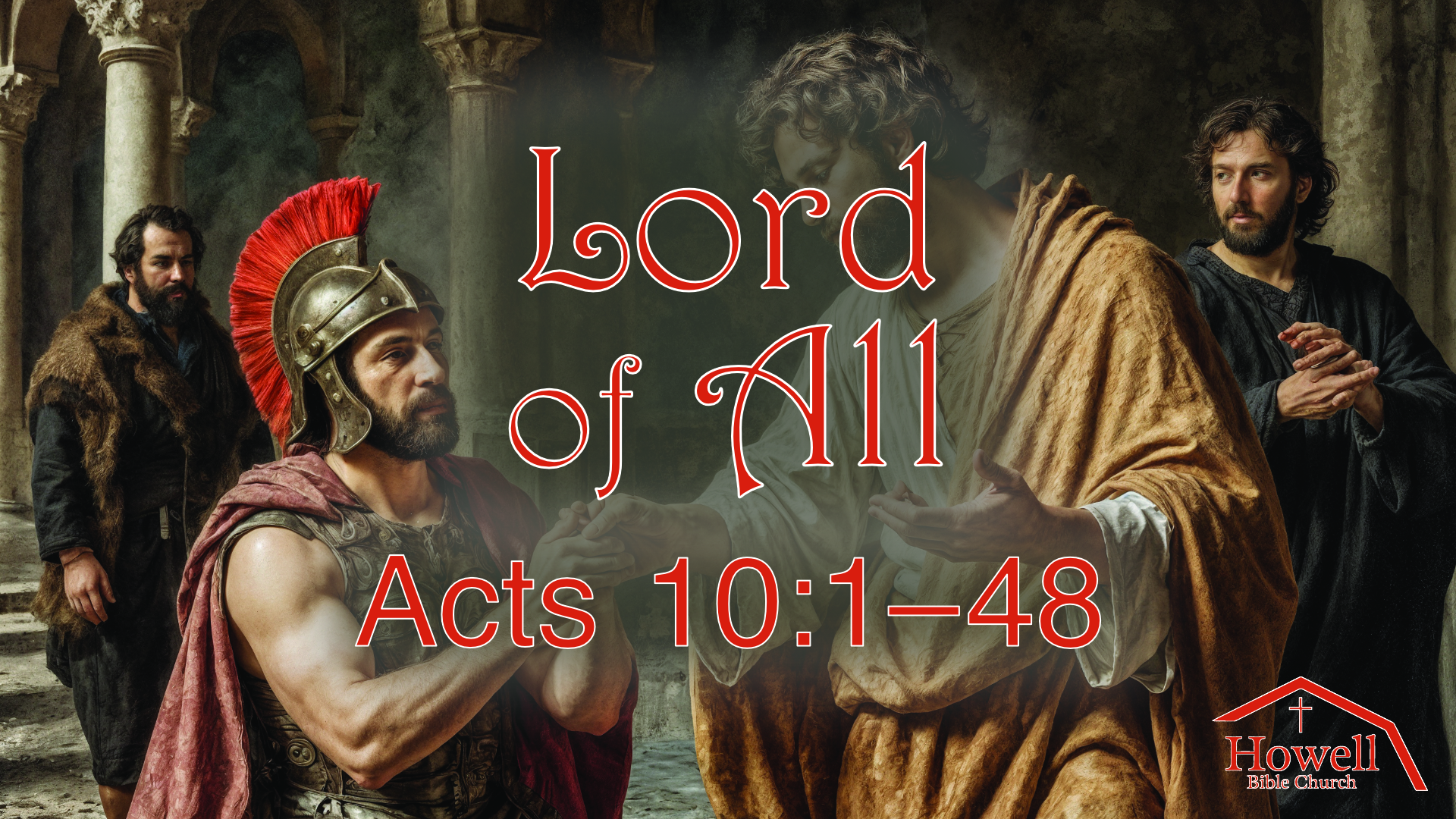
When the World is More Eager Than the Church
Have you ever noticed how sometimes the people we assume aren’t interested in God turn out to be the most spiritually hungry? We make excuses—”If they wanted to know about God, they’d come to church” or “The information is out there; it’s in their court now.” But what if our assumptions are wrong? What if the world is actually more eager to receive the gospel than we are to proclaim it?
That’s exactly what we discover in Acts 10, one of the most pivotal chapters in human history. This is the moment when God officially opens the door for the gospel to go to the Gentile world. Without this door swinging wide open, the gospel never would have reached people like us. But here’s the striking reality in this passage: Cornelius the centurion was far more ready to hear about Jesus than Peter was to tell him.
This passage confronts us with an uncomfortable truth about our own hesitancy to cross barriers, our reluctance to share what we’ve freely received, and our tendency to underestimate how hungry people really are for the truth.
The Eager Seeker Who Had Everything but Jesus
Cornelius wasn’t your average Roman centurion. Scripture paints a picture of a man who was devout, prayerful, generous, and God-fearing. He gave alms to the Jewish people. He prayed continually. He had drawn as near to the God of Israel as a Gentile could without becoming a full convert. By all appearances, this was a deeply spiritual man.
But here’s what we must understand: sincerity is not enough for salvation. Interest in spiritual things is not enough. Even having a god that you worship is not enough. Cornelius needed to hear about Jesus. He needed the gospel. Without it, despite all his devotion and good works, his sins remained unforgiven.
God knew this. So He sent an angel to appear to Cornelius with very specific instructions: “Send to Joppa and ask for Simon, who is also called Peter. Bring him here.” And what did Cornelius do? He immediately obeyed. He sent his servants. And then, while he waited for this preacher to arrive, he gathered everyone he could—his relatives, his close friends, his household—and said, “You need to hear this message too.”
Imagine that kind of spiritual hunger. Cornelius didn’t even know what message he was going to hear, but he filled his house with people to listen.
The Reluctant Messenger Who Said “No, Lord”
Meanwhile, Peter was on a rooftop, praying and physically hungry. And that’s when God gave him a vision—a dramatic, repeated, impossible-to-ignore vision. A sheet came down from heaven filled with all kinds of animals, and a voice said, “Get up, Peter, kill and eat.”
Peter’s response? “By no means, Lord, for I have never eaten anything unholy and unclean.”
Let that sink in. Peter said “No” to the Lord. And God had to repeat this vision three times before Peter would even begin to consider what God was showing him. Jesus had already declared all foods clean back in Mark 7, but Peter was still clinging to his traditions, his upbringing, his comfort zone.
This wasn’t really about food, though. The food laws had been given to make Israel a separate, distinct people—set apart for God’s purposes. But now that the Messiah had come, those barriers were being torn down. God was saying, “What I have called clean, no longer call unclean.” And He wasn’t just talking about bacon and shellfish. He was talking about people.
Even after the vision, Peter was confused. But then—perfectly orchestrated by God—the men sent by Cornelius arrived at his door. The Spirit spoke to Peter: “Go with them without misgivings, for I have sent them myself.”
When God Works Overtime to Open a Door
Here’s what strikes me about this passage: God could have sent the angel to preach the gospel directly to Cornelius. It would have been efficient. It would have been clean. But that’s not what God wanted. God desires His people to be the instrument by which the gospel is proclaimed on earth.
So look at what God orchestrated:
- An angel appears to Cornelius with specific instructions
- A vision comes to Peter—repeated three times
- The Spirit speaks directly to Peter, telling him to go
- Men arrive at exactly the right moment
- Everything aligns perfectly
God was working overtime to push Peter across this final barrier, to blow open this last door. And why? Because without it, the gospel would have remained trapped within Jewish culture. The promise that began all the way back in Genesis 12—that through Abraham all the families of the earth would be blessed—was finally being fulfilled.
Peter finally obeyed. He went with the men, and he took witnesses with him (which would later prove crucial). When he arrived at Cornelius’s house, he found it packed with people, all waiting expectantly. Cornelius met him at the door and fell at his feet in worship. Peter had to say, “Stand up! I’m just a man like you.”
And then Peter acknowledged what God had been teaching him: “I most certainly understand now that God is not one to show partiality, but in every nation, the man who fears Him and does what is right is welcome to Him.”
The Same Gospel That Saves Anyone
Peter stood before that eager crowd and preached. And what did he preach? The exact same gospel he’d preached on Pentecost. The exact same message he’d been proclaiming to Jews.
Jesus Christ is Lord of all. He went about doing good, healing those oppressed by the devil. He was crucified. God raised Him from the dead on the third day. He appeared to witnesses. He has been appointed as Judge of the living and the dead. And through His name, everyone who believes in Him receives forgiveness of sins.
No watering down. No contextualization of the core message. No adjusting the truth to make it more palatable. The gospel that saves Jews is the same gospel that saves Gentiles. The gospel that saved people 2,000 years ago is the same gospel that saves people today.
Sometimes we hear about the need to “contextualize” the gospel—to adjust the message based on the audience, the culture, the generation. But Peter didn’t get a seminary degree in missiology. He simply crossed a barrier he never would have crossed on his own and preached the same Christ, the same cross, the same resurrection, the same call to faith.
The message doesn’t change. Our willingness to cross borders and speak it—that’s what needs to change.
When the Spirit Falls and Heaven Interrupts
Here’s one of my favorite moments in this story: While Peter was still speaking, the Holy Spirit fell on everyone who was listening.
As someone who preaches regularly, I can tell you—we always have more to say. Peter certainly had more material. But right in the middle of his sermon, after he’d gotten through the essential elements of the gospel, the Holy Spirit interrupted. God essentially said, “That’s enough, Peter. They’ve heard what they needed to hear. They’re saved.”
The Jewish believers who came with Peter were amazed. They heard the Gentiles speaking in tongues and exalting God. There could be no doubt—God Himself had given them the same gift He’d given to the Jews at Pentecost.
Peter looked at what was happening and said, “Surely no one can refuse the water for these to be baptized who have received the Holy Spirit just as we did, can he?”
The door was open. The gospel had crossed its final major barrier. And it happened not because Peter was eager, but because God was faithful.
The Barriers That Still Exist
Even though God so clearly orchestrated the opening of this door, the problem of division persisted for years in the early church. We see it continuing even in Paul’s letters—Jews and Gentiles struggling to worship together, to eat together, to see each other as truly equal in Christ.
And if we’re honest, divisions still exist today. We see them in the modern Church—people who believe the same gospel, worship the same Lord, but divide over secondary issues. We view other genuine brothers and sisters in Christ as somehow “other,” as not quite measuring up to our standards.
Peter had to learn that no person should be called unholy or unclean. The gospel is for everyone. The worst of sinners. The most broken. The most different from us. There is nobody we shouldn’t try to tell the gospel to.
Think about who that might be for you. What group of people do you instinctively avoid? Who have you written off as “not interested” or “too far gone”? What barriers has God been asking you to cross that you’ve been resisting?
Questions for Reflection
Are You More Like Peter or Cornelius?
When it comes to spiritual eagerness, which character do you relate to more? Are you hungry for God, ready to gather others to hear His word? Or are you reluctant, needing God to repeat Himself multiple times before you’ll obey?
What Borders Is God Asking You to Cross?
Peter had to cross major cultural and religious boundaries. What boundaries might God be calling you to cross? A conversation with a difficult neighbor? A relationship that makes you uncomfortable? A mission field that scares you?
Who Have You Assumed Isn’t Interested?
Cornelius was far more ready than Peter assumed. Who in your life have you written off as “not interested in spiritual things”? What if you’re wrong? What if they’re actually hungry and just waiting for someone to tell them about Jesus?
Are You More Reluctant Than the World Is Eager?
This is the question that haunted me as I studied this passage. The world was more eager to receive the word than the church was to proclaim it. Are you ready to share the gospel with the same enthusiasm you share restaurant recommendations or movie reviews? What would it look like for you to be truly eager?
The Same Gospel for Every Nation
Here’s what I need you to hear: The gospel you received is the same gospel that can save absolutely anyone. It’s not a different message for different people. The good news that Jesus Christ is Lord of all is good news to everyone.
You might cross different borders than someone else. You might be called to reach different people groups, different demographics, different circles. But the message you carry is the same message the Church has carried for 2,000 years: Christ died for our sins, He rose from the dead, He is the glorified Lord, and forgiveness comes through repentance and faith in Him alone.
This week, I want to challenge you to pray for one opportunity to share that message with someone who needs to hear it. You probably won’t have an angel appear to your neighbor. You probably won’t receive a dramatic vision on your rooftop. But if you’re a follower of Jesus, you have been commanded to take this message to the ends of the earth.
So ask the Lord to open a door for you personally. Pray for the courage to walk through it when He does. And remember: Jesus is Lord of all—not just of those who believe in Him, but of every person who has ever lived. That means everyone you encounter is accountable to Him and in desperate need of hearing about Him.
Don’t let the world be more eager to hear than you are to tell. Don’t attempt to shut a door that God has opened wide. God has already done the hardest work—He sent His Son to die and rise again. He’s blown the door wide open. Now He’s simply asking us to walk through it.
Listen to the full sermon here: Lord of All – Acts 10
Preached December 7, 2025 at Howell Bible Church
 Howell Bible Church