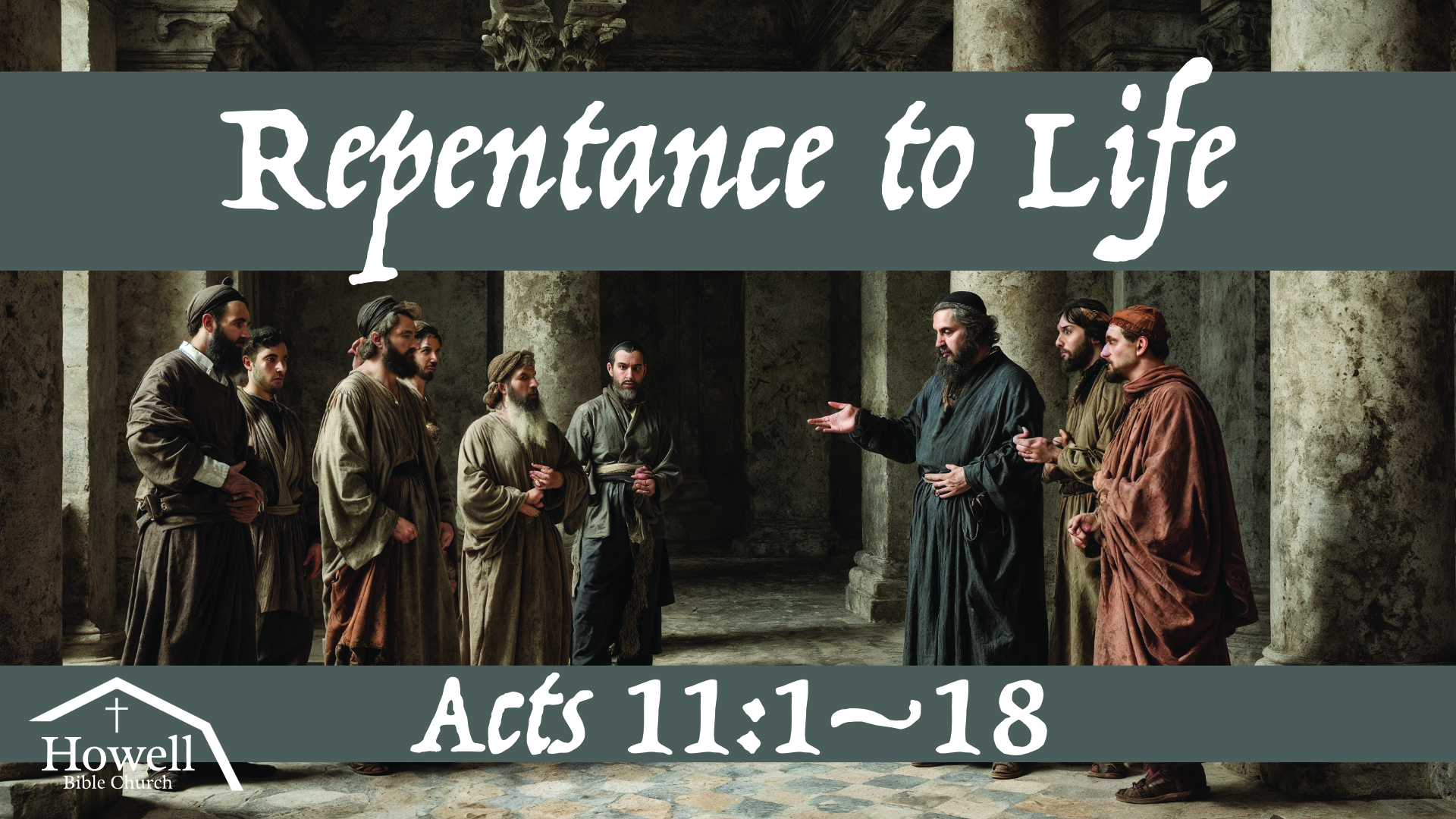
Repentance to Life: When God Opens Doors We’d Rather Keep Closed
What would you do if someone told you that revival was breaking out among the people you like the least?
About a year ago, a friend texted me to say that a genuine move of God seemed to be happening on the Ohio State football team. As a University of Michigan graduate, that rivalry runs deep—it’s not just about sports; it’s cultural identity. My first response wasn’t celebration. But when I confirmed that people were truly being saved, that the gospel was reaching even them, I had to rejoice. Despite my college loyalties, I was genuinely glad to hear that the gospel was advancing.
But here’s the uncomfortable question we all need to wrestle with: Who are the “even them” people in your life? Maybe it’s not about a football rivalry. Maybe it’s a political affiliation that makes your blood boil. Maybe it’s a lifestyle you find reprehensible. Maybe it’s just people who annoy you. We all have these categories—people we’d struggle to genuinely celebrate if we heard they came to Christ.
Acts 11:1-18 shows the early church facing this exact struggle. And here’s what’s striking: for most of us reading this as Gentiles, there was a point in history when we were the “even them” people. The door that was opening in this passage was opening for us.
When the News Travels Faster Than the Messenger
The apostles and believers throughout Judea heard that the Gentiles had received the word of God. But notice what happens next: When Peter came up to Jerusalem, those who were circumcised took issue with him. They didn’t welcome him with open arms or ask to hear the amazing testimony of what God had done. Instead, they came with an accusation: “You went to uncircumcised men and ate with them.”
To modern ears, this might not sound like much. But in their context, this was a charge of lawbreaking. Peter, a leader in the church, was being accused of violating the very law that set them apart as God’s people. The controversy had been brewing for days while Peter was still in Caesarea, and by the time he returned home, instead of rest, he walked into an interrogation.
Imagine witnessing one of the most significant moves of God in history—the Holy Spirit falling on Gentiles just as He fell on the Jewish believers at Pentecost—and receiving immediate criticism from your own church family as your reward.
The Reluctant Obedience of a Changed Mind
Peter doesn’t get defensive. Instead, he gives them a detailed, orderly account. And what’s fascinating is that Peter admits he struggled with this too. He tells them about the vision—the sheet lowered from heaven containing unclean animals, the voice commanding him to “kill and eat.” And notice his response: “By no means, Lord, for nothing unholy or unclean has ever entered my mouth.”
Think about that. Peter is in a trance, seeing a vision, hearing a voice from heaven, and he’s arguing with it. He’s so deeply formed by the law, so convinced of what’s clean and unclean, that even divine instruction initially faces resistance. This happened three times before the message finally broke through: “What God has cleansed, no longer consider unholy.”
Peter wanted them to understand—he wasn’t just cavalier about the law. He wasn’t suddenly dismissing God’s commands. God Himself had to change his mind. And not just through one supernatural encounter, but through a carefully orchestrated series of events: the vision, the Spirit’s clear direction, the arrival of three men at the exact right moment, and six witnesses who accompanied him to verify everything that happened.
Words That Save
The story gets even more powerful when Peter recounts what Cornelius told them—that an angel had appeared to him with specific instructions: “Send to Joppa and have Simon, who is also called Peter, brought here, and he will speak words to you by which you will be saved, you and all your household.”
That phrase demands our attention: words by which you will be saved.
We know that only Jesus saves. We know that salvation comes through His finished work on the cross, His resurrection, His victory over sin and death. And yet, God has chosen to work through His church, through the proclamation of His people, to bring that saving message to the world. God didn’t send an angel to preach the gospel to Cornelius. He sent an angel to say, “Go get Peter, who will speak words to you by which you will be saved.”
This reveals the weight of what’s been entrusted to us. The responsibility—and privilege—we have as Christians to make Jesus known is immense. The words we speak when we proclaim Christ in His authority carry the power of salvation for those who believe. Not because we’re powerful, but because the gospel is powerful.
The Undeniable Evidence
As Peter began to speak, something happened that left no room for debate. “The Holy Spirit fell upon them, just as He did upon us at the beginning.” Peter refers to Pentecost as “the beginning”—not Jesus’s earthly ministry, not the three years he walked with Him, but Pentecost. That’s when something fundamentally shifted in redemptive history.
And now, in Cornelius’s house, that same Holy Spirit fell on Gentiles. Not a different gift. Not a lesser gift. The exact same manifestation of God’s presence that had marked the Jewish believers was now marking these Gentile believers.
Peter remembered Jesus’s words: “John baptized with water, but you will be baptized with the Holy Spirit.” And in that moment, watching the Spirit fall on people he never expected to include in God’s family, everything clicked. “Therefore, if God gave to them the same gift as He gave to us also, after believing in the Lord Jesus Christ, who was I that I could stand in God’s way?”
Who was I that I could stand in God’s way? That question should make us pause. If we have categories of people we think don’t deserve the gospel, people we’d rather not see saved, people whose conversion would make us uncomfortable—we are standing in God’s way. And we need to stop.
From Criticism to Celebration
What happens next is remarkable: “When they heard this, they quieted down and glorified God.”
Think about the shift that had to happen. They came ready for a fight. They had probably been stewing on this for days, building their case, preparing their objections. And then Peter gives them the evidence—the vision, the Spirit’s direction, the six witnesses, the undeniable outpouring of the Holy Spirit—and they became silent.
Not just quiet. Silent. They had nothing left to say. And then they did something beautiful: they glorified God. They said, “Well then, God has granted to the Gentiles also the repentance that leads to life.”
That phrase—”repentance that leads to life”—is so important. This wasn’t about Peter saying, “Hey, we were wrong about the Gentiles. They’re actually pretty decent people.” He wasn’t saying their idol worship was no big deal, that their former way of life was acceptable. He was saying that even people who had lived in such darkness, who had been so far from God, could turn away from death and find life in Christ.
The gospel isn’t a life enhancer for people already doing fine. Jesus didn’t come to help us be better at chasing money, better at satisfying our appetites, better at living for ourselves. He came to call people out of darkness and into His marvelous light. He came to offer repentance—a complete turning away from death and toward life.
What This Means for Us
Consider what your life would look like if you were free from the burden of being God’s gatekeeper. What if you stopped trying to decide who deserves to hear the gospel and who doesn’t?
And what would the church look like if we became known in our communities as places where all are welcome to hear about God’s gift—no matter what they’ve done, who they are, or where they’ve been? What if we were people who genuinely believed and demonstrated that God’s grace is sufficient for anyone—even them?
Here’s the truth we all need to hear: we were all outsiders once. Most of us reading this aren’t Orthodox Jews. As Gentiles, we need to understand that this controversy in Acts 11 was about us. This door could have remained closed. The church could have stayed divided. But instead, they accepted what God was doing and praised Him for it.
Questions for Reflection
Who Are Your “Even Them” People?
Is there a group of people—defined by politics, lifestyle, background, or personality—that you’d struggle to genuinely celebrate if you heard they were getting saved? What does that reveal about your heart?
Are You Carrying the Words?
Do you truly believe that you carry “words by which people can be saved”? How does that reality affect the way you interact with unbelievers in your life?
When Was the Last Time You Rejoiced Over a Conversion?
Not just nodded approvingly, but actually rejoiced? Have you become so familiar with the gospel that salvation stories have lost their power to move you?
Are You Standing in God’s Way?
In what ways might you be functioning as a gatekeeper rather than a herald of good news? Where do you need to “quiet down and glorify God” for what He’s doing, even if it’s unexpected?
The Gift Is Offered to All
Heaven rejoiced when God reached each of us. When we turned and believed, there was celebration in the presence of the angels. That same gift was offered to every believer throughout history.
God offers the gift of repentance to everyone. That doesn’t mean everyone receives it, but the offer is there for all. Not just for people we like. Not just for people who look like us or vote like we do. Not just for people whose lifestyles we approve of. For everyone.
The challenge before us is twofold: First, rejoice more about salvation. When you hear of someone coming to Christ—anyone—let it move you. Let it remind you of what God has done for you. Second, reach out more. Maybe even to people you haven’t thought about. Maybe even to people who annoy you or irritate you. They might be exactly the ones who need to hear the words by which they can be saved.
As you do this, take notice of what God is doing in your own heart and in the world around you. Because despite what the news says, the church is continuing to advance. People are continuing to be saved. And we still carry the words by which people can be saved.
Don’t stand in God’s way. Join Him in what He’s doing. Celebrate when the lost are found. And remember—the same grace that saved you is sufficient for anyone.
Listen to the full sermon here: Repentance to Life – Acts 11:1-18
Preached December 14, 2025 at Howell Bible Church
 Howell Bible Church