When God Interrupts the Good to Call You to the Greater
We live in a culture obsessed with optimization. GPS routes us around traffic. Apps deliver groceries to our doorstep. We can accomplish in hours what once took days. And somewhere along the way, we’ve internalized a dangerous assumption: if there’s an easier path, we should take it.
But what if following Jesus actually requires the opposite of optimization? What if the path of discipleship sometimes leads away from comfort and toward something harder—something that looks less like upgrading your life and more like disrupting it? The church at Antioch was about to find out.
In Acts 13, we encounter a thriving community of believers doing everything right. Five gifted leaders were ministering to the Lord. The gospel was advancing. Then the Holy Spirit spoke: “Set apart for me Barnabas and Saul for the work to which I have called them.” God was asking them to release 40% of their leadership team. No explanation. No guarantee of easy replacements. Just an invitation to obedience that would cost them something precious.
Ministering to the Lord, Not Just Managing a Ministry
The text tells us something crucial about what was happening in Antioch: “While they were ministering to the Lord and fasting, the Holy Spirit said…” This phrase, “ministering to the Lord,” is transformative. This isn’t language about programs or services or even ministry to people. This is about worship.
Many approach church the way we approach everything else in our convenience-driven culture: as consumers. We church shop. We evaluate features and benefits. We ask, “What’s in it for me?” But the believers in Antioch gathered with a radically different question: How can we bring honor and glory to God?
They weren’t asking, “Does this worship set match my preferences?” or “Is the sermon speaking directly to my needs?” They came to minister to the Lord. They were offering Him service, bringing Him praise, submitting themselves to His Word. And they did this while fasting, a discipline that intentionally embraces discomfort to humble our hearts and sharpen our spiritual sensitivity.
Here’s what’s remarkable: it was in this posture of worship and self-denial that the Holy Spirit spoke.
The Call That Costs Something
“Set apart for me Barnabas and Saul.” Five leaders. God asked for two. Not the expendable ones. Not the least effective. He asked for Barnabas—the encourager, the one everyone loved—and Saul, the brilliant teacher trained under Gamaliel who could connect the Old Testament to Jesus like no one else.
The biggest hindrance for some Christians to doing what God has called them to do is continuing to do what they’re currently doing. It is hard to release good things to pursue God’s greater purposes. We cling to comfortable rhythms and familiar roles, convinced that what we’re doing now is too important to let go.
But notice what the Holy Spirit didn’t say. He didn’t say, “Set them apart because what you’re doing here doesn’t matter.” He said, “I have called them to the work“—a different work, an additional work, a work beyond Antioch’s walls. The ministry in Antioch was good and right. But God had something else for Barnabas and Saul. They weren’t shutting down the church in Antioch. The rest would carry on while Paul and Barnabas would take the gospel even deeper into the Roman empire.
Christianity is not moralism. It’s not about being generally good and hoping God approves. It’s about following the risen Lord Jesus wherever He leads. And sometimes He leads us away from good things to do the specific thing He’s calling us to do.
An Obedience That Releases Rather Than Restrains
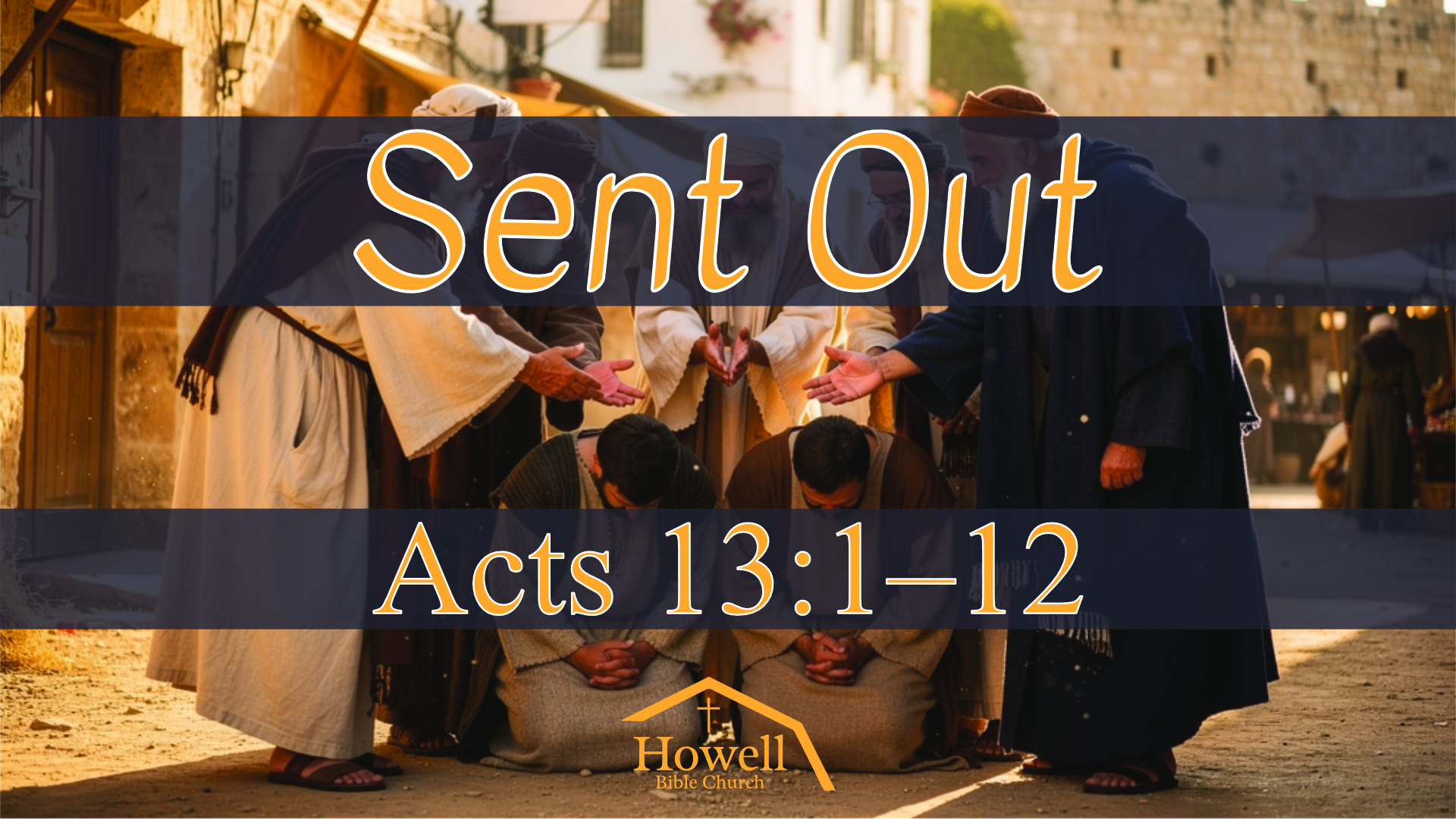
How did the church respond? They could have protested. They could have said, “But Lord, we need them here! Things are going so well!” Instead, “they fasted and prayed and laid their hands on them, and sent them away.”
Read that again: they sent them away. The church publicly endorsed God’s call on these men’s lives and released them to do it. They didn’t guilt them into staying. They didn’t make them choose between loyalty to the community and obedience to God. They recognized that God’s purposes were bigger than their preferences, and they participated in sending them out.
“Being sent out by the Holy Spirit, they went down to Seleucia, and from there they sailed to Cyprus.” Notice the real agent here isn’t the church—it’s the Holy Spirit. God does the sending. The church simply aligns itself with what God is already doing.
This is the kind of church that advances the kingdom. Not one that hoards its best people to build its own empire, but one that releases them to plant, to pioneer, to go where the gospel hasn’t gone. It’s uncomfortable. It’s inconvenient. But it’s obedience.
The Hand of the Lord: Blessing and Judgment
When Barnabas and Saul arrived in Cyprus with John Mark as their helper, they immediately began proclaiming the Word of God in the synagogues. Even though Paul would become known as the apostle to the Gentiles, they started where people had the greatest foundation to believe—among the Jews who already had Moses, the prophets, and the Psalms.
Eventually, they encountered Sergius Paulus, the Roman proconsul—essentially the governor of the entire island. He was “a man of intelligence” who summoned them to hear the Word of God. But standing between them and the proconsul was Elymas, a Jewish magician and false prophet who was “opposing them, seeking to turn the proconsul away from the faith.”
Then Paul, filled with the Holy Spirit, looked straight at Elymas and said: “You who are full of all deceit and fraud, you son of the devil, you enemy of all righteousness, will you not cease to make crooked the straight ways of the Lord?”
This wasn’t Paul losing his temper. This was apostolic authority speaking prophetic truth. Elymas wasn’t just mistaken—he was actively working to prevent someone from coming to faith. And Paul, speaking by the Spirit, pronounced judgment: “Now behold, the hand of the Lord is upon you, and you will be blind and not see the sun for a time.”
The hand of the Lord. Earlier in Acts, we saw that phrase used positively—the hand of the Lord was with the church, and they grew. But here, the hand of the Lord falls in judgment. The same God who empowers His people for mission also opposes those who oppose His purposes. This isn’t cruelty; it’s holiness. And it’s a reminder that outside of Christ, people stand under God’s wrath, not His favor.
The proconsul witnessed this confrontation and believed, “being amazed at the teaching of the Lord.” Yes, he saw the miracle. But what amazed him was the message—the teaching about Jesus, about the cross, about resurrection, about salvation offered freely to all who believe.
Application: Where Are You Choosing Convenience Over Conviction?
This passage isn’t just history. It’s an invitation to audit our own lives. So let me ask you some uncomfortable questions:
Is there a conversation you know you need to have but keep avoiding?
Maybe God has put someone on your heart—a family member who needs to hear the gospel, a friend you need to reconcile with, a person you need to confront in love. But it would be awkward. It might get messy. So you keep postponing it, convincing yourself that “the time isn’t right.” What if the right time is now?
What good thing are you clinging to that’s keeping you from God’s greater call?
Maybe you’re teaching a Bible study, serving in a ministry, or maintaining a routine that’s genuinely good. But what if God is asking you to release it for something else? The question isn’t whether what you’re doing is good—it’s whether you’re willing to obey when God calls you elsewhere.
Are you waiting for your circumstances to improve before you’ll obey?
“Lord, I’ll go when the kids are older.” “God, I’ll give generously when I’m more financially stable.” “I’ll serve when life calms down.” But what if God is calling you to obey right now, in the middle of the chaos? What if the timing will never feel perfect?
Where are you running when God is telling you to stay—or staying when God is telling you to go?
Discerning God’s voice requires honest self-examination. Some of us are always looking for the next thing, convinced the grass is greener elsewhere. Others are so comfortable we can’t imagine God asking us to move. Both errors should be avoided.
Following the Spirit Wherever He Leads
Here’s what I want you to hear: God doesn’t call us to convenience. He calls us to Himself. And sometimes following Him means leaving comfort behind. Sometimes it means going when things are good. Sometimes it means staying when things are hard.
Paul and Barnabas left Antioch and immediately faced opposition. They dealt with false prophets, hostile confrontations, and spiritual warfare. It wasn’t easier. But God was glorified. The proconsul came to faith. The gospel advanced. And ultimately, this mission would result in churches planted across the Roman Empire.
The same Spirit who spoke to the church at Antioch is still leading His people today. Maybe He’s calling you to go—to the mission field, to a new city, to plant a church, to start a ministry. Maybe He’s calling you to stay—to remain faithful in the difficult relationship, to keep serving in the unglamorous role, to dig deeper where you are.
But whatever He’s calling you to, this much is certain: obedience is always worth it. The God who asks you to release comfort is the same God who goes with you into the uncomfortable places. His hand is upon His people—not for judgment, but for blessing, for power, for fruitfulness that lasts.
So, this week, will you ask Him? Lord, where am I choosing convenience over conviction? Where am I delaying obedience? What are You calling me to do? And then, when He shows you, will you say yes—even if it costs you something?
The church at Antioch did. And the gospel reached the ends of the earth because of it.
Listen to the full sermon here: Sent Out – Acts 13:1-12
Preached January 12, 2026, at Howell Bible Church
 Howell Bible Church