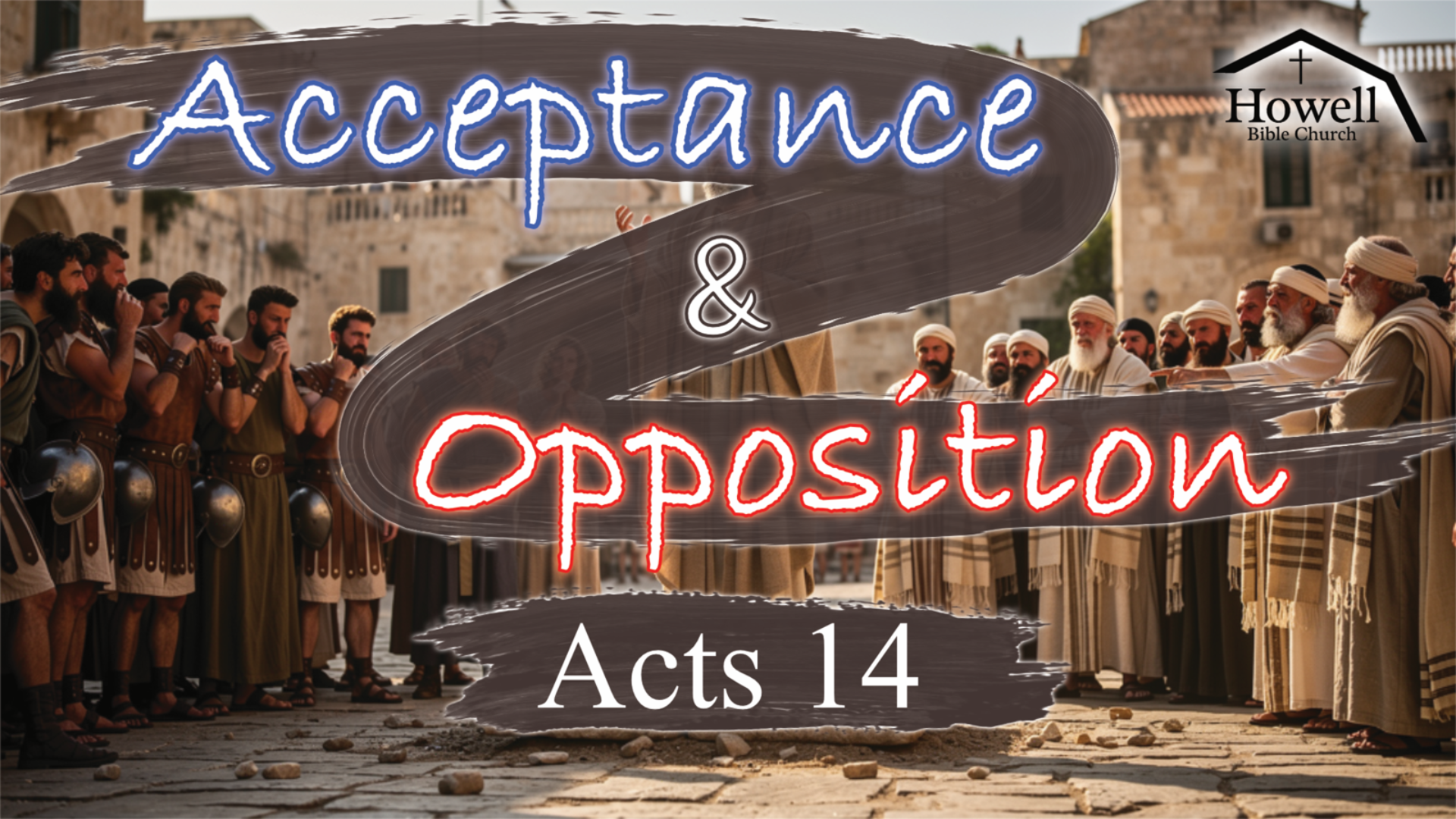
Acceptance and Opposition – Acts 14
The Courage to Go Back
This past Sunday, our evangelist Eric Love preached through Acts 14. By Acts 14:21, Paul and Barnabas had reached Derbe. They’d been stoned, beaten, driven from city to city, and finally they’d made many disciples in Derbe. Look at a map of their journey, and you’ll notice something striking: they were geographically closer to their sending church in Antioch than they’d been in weeks. The logical move—the safe move—would have been to head straight home.
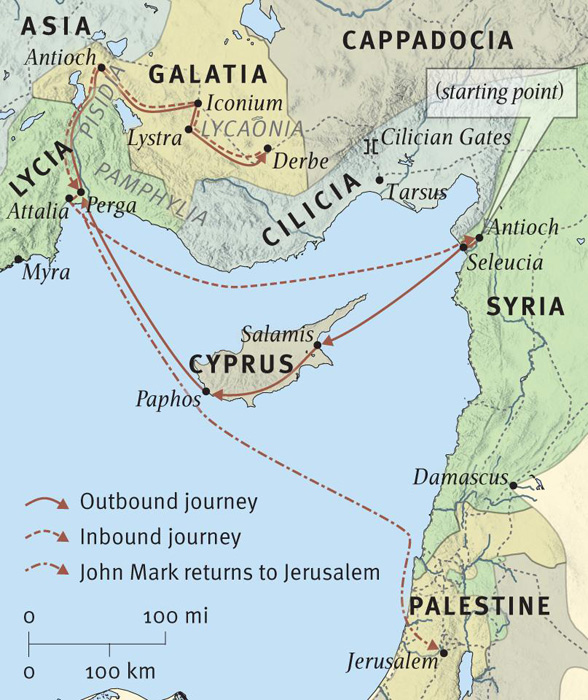
Instead, they turned around.
They reversed course and walked directly back into the face of the persecution they’d been fleeing. Back to Lystra, where Paul had been stoned and left for dead. Back to Iconium, where the crowds had plotted to stone them. Back to Antioch of Pisidia, where they’d been violently expelled from the city. Why would anyone do this?
Because the gospel doesn’t just save individuals—it establishes churches. And Paul and Barnabas understood that healthy, functioning local churches were essential to continue the mission after they left the region. Their return journey wasn’t recklessness. It was strategic conviction about the power of the gospel proclamation and the necessity of establishing elders and strengthening disciples in every church they’d planted.
The Secret of Their Success
Eric began the message by highlighting the question every preacher wants to know: What caused so many people to believe when Paul and Barnabas preached in Iconium? Acts 14:1 says they “spoke in such a manner that a large number of people believed, both of Jews and of Greeks.”
The answer isn’t found in rhetorical skill or persuasive technique. Verse 3 reveals their secret: “They spent a long time there speaking boldly with reliance upon the Lord, who was testifying to the word of His grace, granting that signs and wonders be done by their hands.”
Reliance. Complete, uncompromising reliance on the Lord.
Paul and Barnabas weren’t trusting in themselves. They weren’t operating from a place of self-confidence or human ability. They were utterly dependent on Christ to work through them. And the Lord testified to their message by performing miracles that authenticated the gospel and demonstrated God’s approval of the risen Jesus.
This challenges those of us who minister in any capacity. Do we rely on our preparation, our gifting, our experience? Or do we genuinely depend moment by moment on the power of Christ working through us? As Eric reminded us from 1 Corinthians 15:10, Paul could say, “I labored… yet not I, but the grace of God with me.” It’s both/and. We labor faithfully, but God gets the credit because He’s the one producing the fruit.
Miracles That Demand a Verdict
One of Eric’s most compelling points was how Luke presents miracle accounts in Acts. These weren’t vague legends or stories that grew with time. Luke recorded them with specific, verifiable details that invite investigation.
Consider the healing in Lystra: “A man was sitting who had no strength in his feet, lame from his mother’s womb, who had never walked” (Acts 14:8). That level of detail matters. This wasn’t a minor ailment or a psychosomatic condition. This was a man who had never walked—not even once. And when Paul commanded him to stand, he immediately leaped up and began walking.
Eric pointed out three crucial elements in how Luke records these miracles:
First, the miracles were remarkable and undeniable. They couldn’t be dismissed as natural phenomena or coincidences. People lame from birth don’t spontaneously develop the ability to walk.
Second, the miracles were witnessed by many people—including enemies of Christianity. Luke practically invites readers to verify the accounts by interviewing eyewitnesses. He even includes names of people who were healed, making investigation easier.
Third, the miracles were done in Jesus’ name. If Jesus had been a false messiah, God would never have allowed miracles to be performed in His name. The continued miraculous authentication proved God’s approval of Jesus and the truth of the gospel message.
As Eric said, “We believe these things not because we’re gullible people. We believe these things because there’s good reason to.”
The Horror of Misdirected Worship
After Paul healed the lame man in Lystra, the crowds erupted. “The gods have become like men and have come down to us!” they shouted in their local dialect. They called Barnabas “Zeus” and Paul “Hermes,” and the priest of Zeus brought oxen to offer sacrifices to them.
This was Paul and Barnabas’s chance. If they wanted recognition, authority, or adoration from men—this was it on a silver platter. They could have soaked it in.
Instead, they were horrified.
They tore their robes—a sign of extreme distress—and rushed into the crowd crying out: “Men, why are you doing these things? We are also men of the same nature as you!” Eric emphasized that their reaction reveals everything about their motives. They had no desire for personal glory. Their entire ministry was about exalting Christ and redirecting all worship to Him alone.
Eric shared a recent experience where someone compared our church’s benevolence ministry to “angels sent from God.” His response was perfect: “Listen, the reason we do this is because Jesus told us to. If Jesus didn’t tell us to do this, honestly, I’m not driving all over the place helping people this way. We do this because Jesus is our Lord.”
It’s all about Him. That’s the end of the story.
Every act of service, every instance of generosity, every good work—it all points back to Christ. We’re simply reflecting His character and obeying His commands. The glory belongs to Him alone.
Continue reading →




 Howell Bible Church